Zip screens · Product profile
Zip screen product profile: from first production to 2025 peak
This article is based on Ferrini’s 2015–2026 production records; figures are given as shares and indices only.
- Zip screens entered regular production at Ferrini in 2020, and 2025 is the highest year to date in units.
- Almost every zip screen is now motorised: 98% in 2025, against 54% in 2020.
- A zip screen unit is worth on average about 3.7 times a roller shutter unit.
- Zip screens make up about 54% of Ferrini’s export value, which makes them its strongest export product.
Ferrini’s report profiles each product family twice: once through its latest figures, and once by comparing its first years with today. For the zip screen, the first period is 2020–2022 and the comparison runs to 2025. The profile below brings together the figures most relevant to European buyers and specifiers: how the family is made up, how far it is motorised and remote-controlled, what it represents in value, and which colours are chosen. All figures are from Ferrini’s production and order records.
Questions about zip screens? Ferrini’s team will be glad to help: +90 232 864 22 20.
Then and now
In the first three years, vertical screens made up 96% of the family; in 2023–2025 the figure was still 95%, with roof screens accounting for the rest. The configuration of the product has therefore stayed stable while volumes grew year by year to the 2025 peak.
Production follows the seasons: Ferrini’s zip screen output is highest in July, when outdoor shading is in greatest demand, while glass balconies and windows peak towards winter.
Motorised and remote-controlled
The motorised share of zip screens rose from 54% to 98% between 2020 and 2025, so a manual screen is now rare in Ferrini’s output. Remote control became standard at the same time: in 2025 about 97% of motorised zip screen job lines used a motor with a built-in radio receiver, and across 2021–2026 the figure was about 92%. On roller shutters, where large projects often use motors without receivers, the equivalent share in 2025 was about 32%.
For dealers and installers, motor, remote control and smart home set-up are therefore part of almost every zip screen sale, and the report places them at the centre of after-sales service.
Value and colour
A zip screen unit is worth on average about 3.7 times a roller shutter unit, so the product weighs more in value than in volume: in 2025 it accounted for 4.7% of the units Ferrini produced and 11.7% of approved order value. The report connects the zip screen’s weight in exports with the growth of the screen market in Europe and treats it as the product with which Ferrini is mainly known abroad.
In Ferrini’s records anthracite grey is the main colour across products, while beige grey has risen in recent years and holds a stronger position in zip screens than elsewhere. Beige grey’s share of roller shutter and zip screen units grew from 8% in 2018 to 33% in the first half of 2026, and the report advises dealers to give both tones priority in stock.
Frequently asked questions
Can a zip screen still be ordered without a motor?
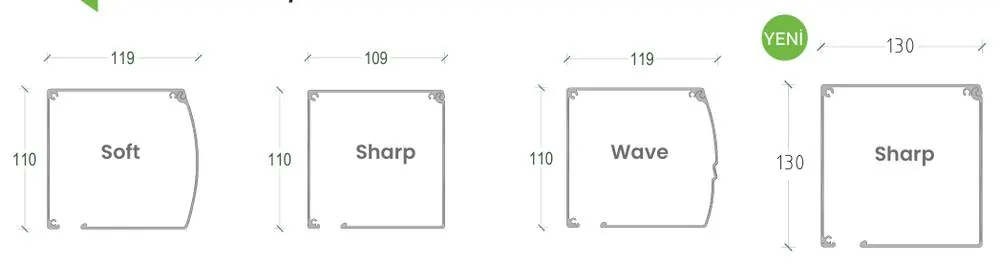
Yes. Ferrini’s catalogue includes the manually operated Zipline Neo 110 Touch alongside the motorised Zipline Neo 110 Sharp and a solar-panel version. Manual screens have become the exception, however: 98% of the zip screens Ferrini produced in 2025 were motorised, so the motor, the remote control and their after-sales service are now part of the standard specification.
What is the difference between vertical and roof zip screens?
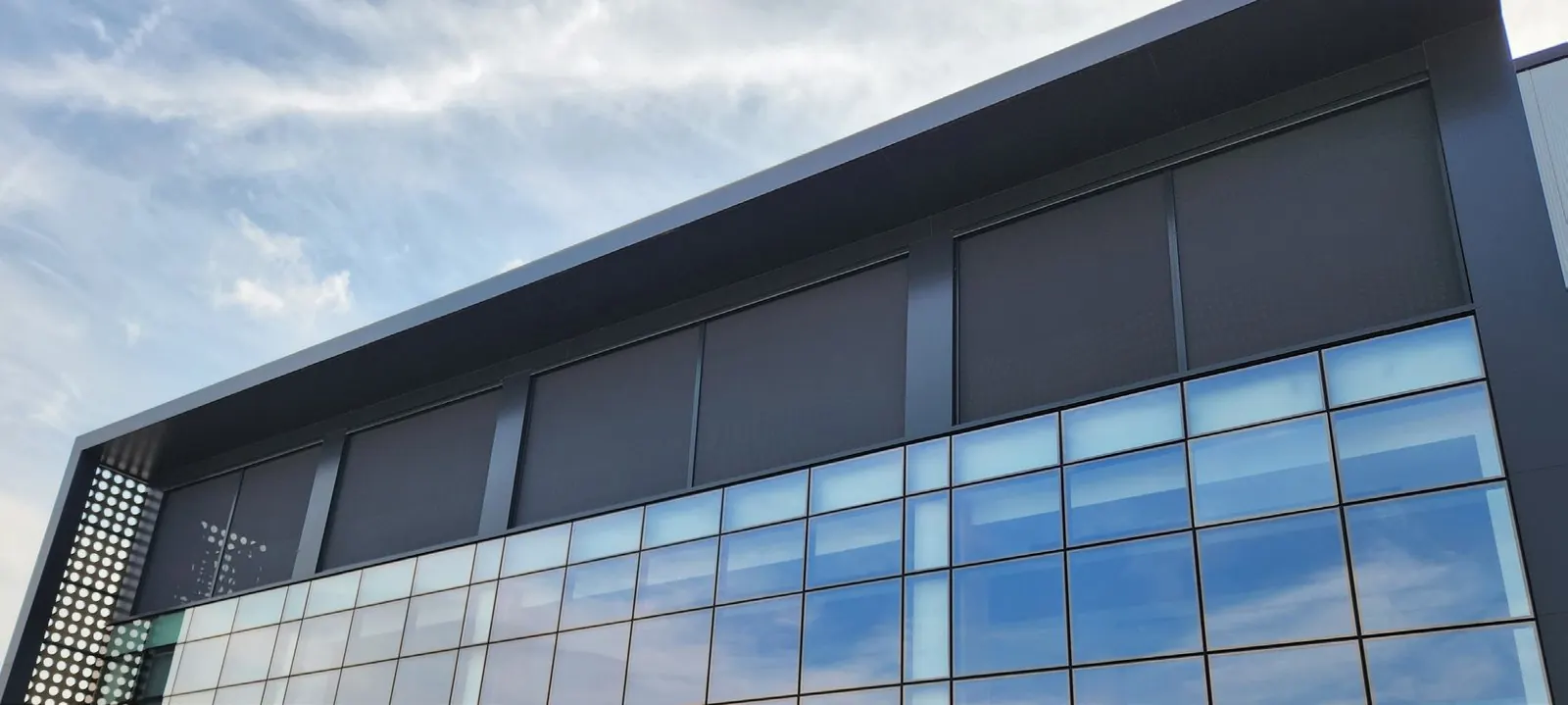
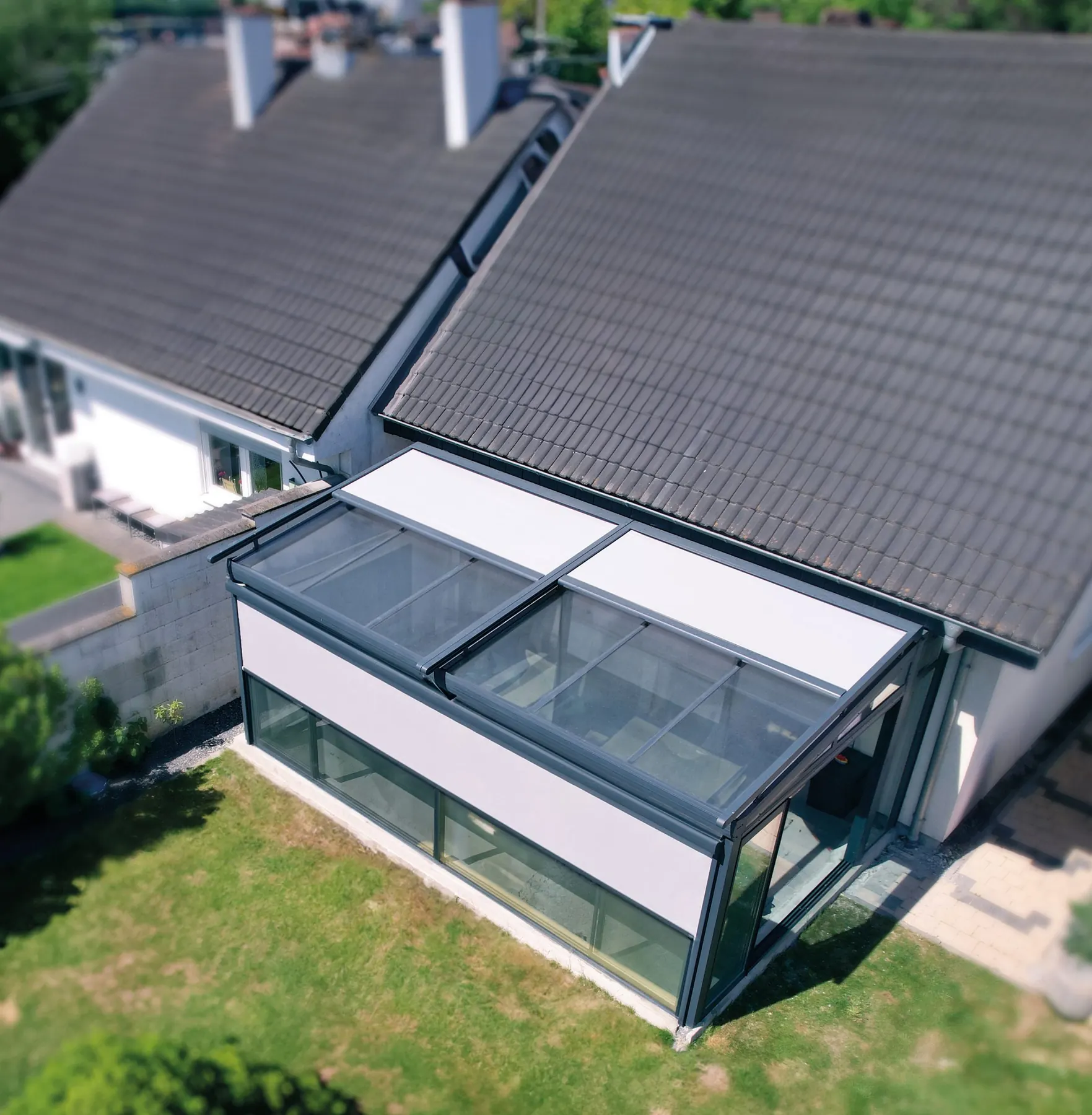
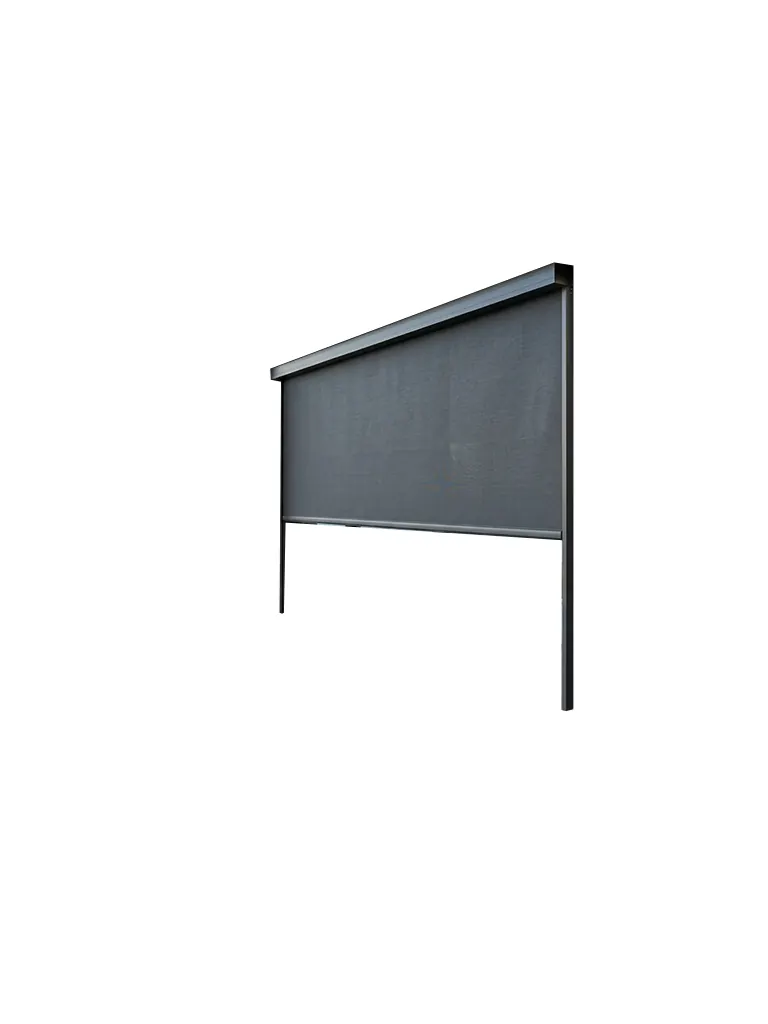
Vertical zip screens, the Neo series, hang in front of windows, glass walls and terraces. Roof zip screens, the Sky series, are fitted horizontally or at a slope under glazed terrace and winter garden roofs; the Zipline Sky 2 adds piston assistance. Vertical screens dominate Ferrini’s output, making up 95% of the family in 2023–2025.