Zip screens · Sizes
Zip screen sizes: median unit area from 8.6 to 7.8 m²
This article is based on Ferrini’s 2015–2026 production records; figures are given as shares and indices only.
- About half of the zip screens in Ferrini’s production records measure between 4 and 8 m².
- The median area per unit was 8.6 m² in 2022 and 7.8 m² in 2025; it fell until 2024 and rose again in 2025.
- Roof zip screens for terraces and winter gardens make up about 5% of the zip screen family.
- Wind resistance of external blinds is expressed in classes, which the EU extended with classes 4, 5 and 6 in 2019 [1].
How large is a typical zip screen? The question matters to architects detailing glazed facades and to dealers planning fabric, profiles and installation teams. For the screens made at Ferrini’s plant in İzmir, the production records give a measured answer, because the fabric area is noted for many job lines. This article explains what the resulting median shows and what it does not, how the vertical and roof versions differ, and why the declared wind class belongs in any comparison alongside size.
For more information, contact Ferrini: +90 232 864 22 20 · info@ferrini.com.
Reading the median
The figure is a median, not an average: it is the middle value of the recorded units, with half larger and half smaller. It covers job lines where the fabric area per screen was recorded, and years with fewer than 100 such records are not shown. On this basis the median dropped from 8.6 m² in 2022 to 7.8 m² in 2025, falling until 2024 before rising again in the last year.
The report does not explain the decline, and the data come from a single manufacturer, so they describe Ferrini’s output rather than the market. They are more informative when read alongside other changes in the same period. The number of units per job line, a rough indicator of project size, increased from 2.1 in 2020 to 2.7 in 2025: projects now tend to include more screens, while the median screen is somewhat smaller than in 2022.

Vertical and roof screens
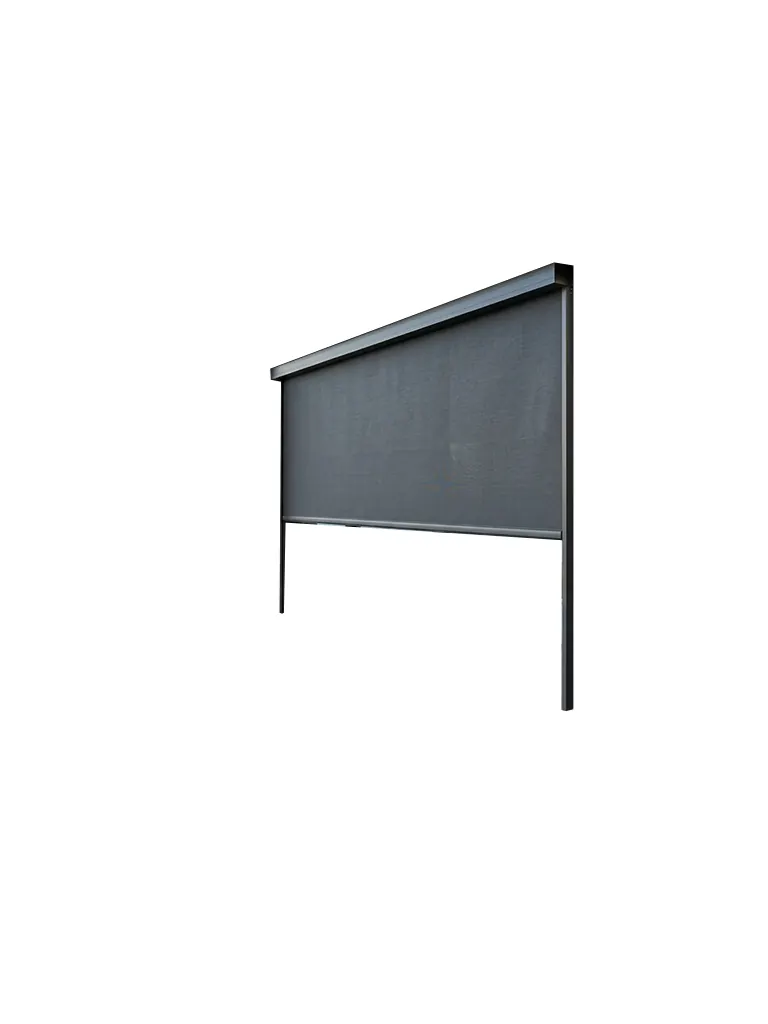
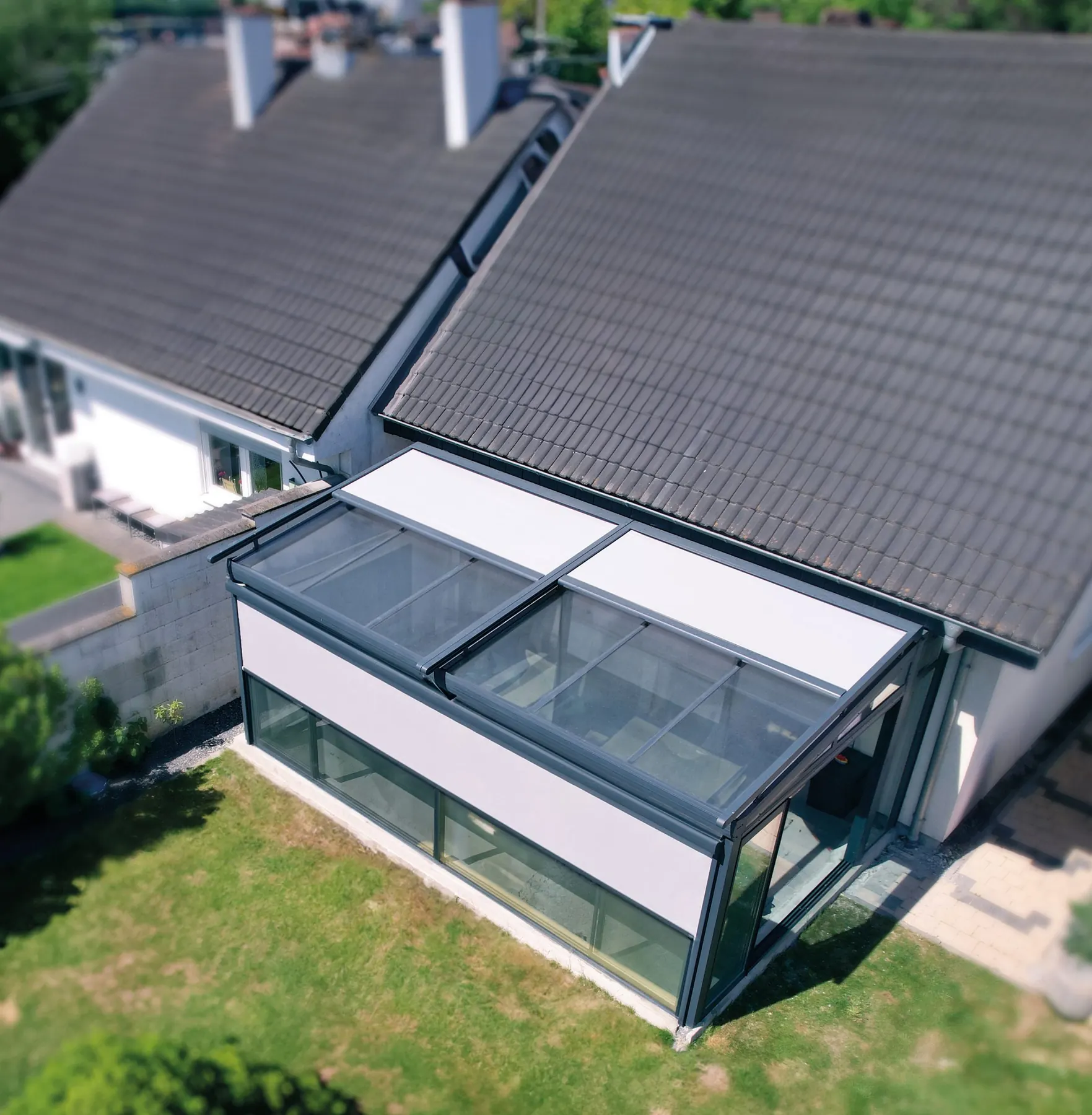
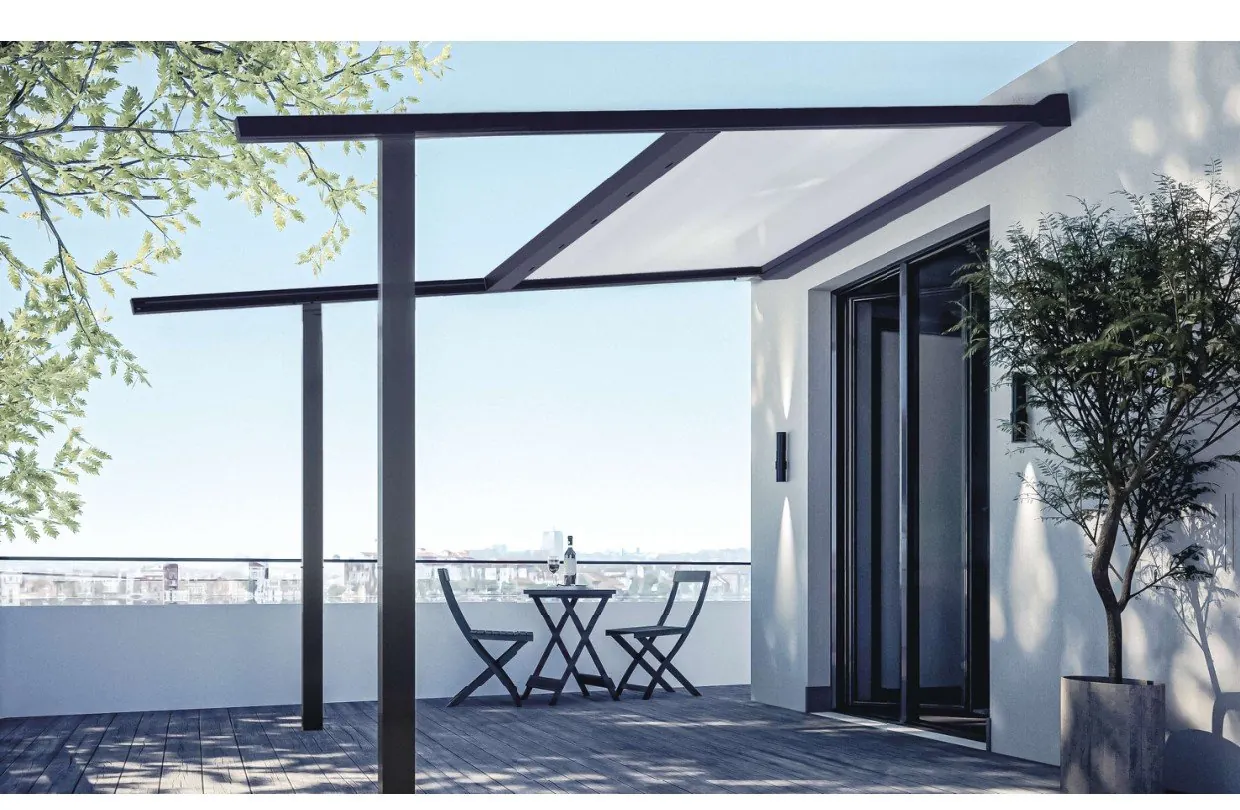
Vertical zip screens are mounted on the facade in front of windows and glass walls; in Ferrini’s catalogue they belong to the Neo series. Roof zip screens are fitted horizontally or at a slope over terraces and winter gardens and are offered in the Sky series. Roof screens entered regular production at Ferrini in 2021 and today make up about 5% of the zip screen family; a piston-assisted roof model was among the screens shown at Fensterbau Frontale 2026.
The report links the growth of shading products to the spread of large glazed openings in residential design. For zip screens, however, larger glass has not translated into a steadily rising median size, which is one more reason not to read the figure as a design trend on its own.
Size and wind resistance
Size is only part of a specification. EN 13561 sets performance requirements for external blinds, including safety, and defines wind resistance classes [2]. In 2019 the EU added classes 4, 5 and 6 to reflect the more resistant products on the market [1]. Some manufacturers state resistance per model: the Belgian manufacturer Renson gives 80–130 km/h for its zip screen, depending on the model [3, 4].
Because the Beaufort equivalents of the classes can differ from one manufacturer to another [5], a comparison between offers is more reliable when it rests on the declared class. When specifying a screen for a given opening, it is worth asking for the class declared for that model and for the test basis behind it; resistance to wind loads is tested to EN 1932 [6].
Frequently asked questions
Why are zip screens used on glazed facades?
A zip screen reduces solar heat and glare while occupants can still see out, which suits large areas of glass. European policy points the same way: the recast Energy Performance of Buildings Directive calls for priority to be given to shading and passive cooling measures that prevent overheating [7]. The report lists solar shading louvres, zip screens and external venetian blinds among the practical answers.
Are these figures representative of the European market?
No. They come from one manufacturer’s production records, mostly for projects in Turkey, and only from job lines with a recorded fabric area. They show how the screens Ferrini makes have changed in size, which is useful background for dealers and architects, but they are not a market statistic and should not be used as one.
Sources
- European Commission, Commission Delegated Regulation (EU) 2019/1188 – classes of performance for resistance to wind load of external blinds (EN 13561), OJ L, 12.07.2019. https://eur-lex.europa.eu/eli/reg_del/2019/1188/oj
- CEN (European Committee for Standardization), CEN/TC 33, EN 13561:2015 External blinds and awnings; EN 13659:2015 Shutters and external venetian blinds – Performance requirements including safety, August 2015 (catalogue records). https://iteh.es/catalog/standards/cen/49186b1d-7c1a-4bbc-9a04-f83572642c33/en-13659-2015
- Renson, About Renson, undated page, accessed 02.10.2026. https://www.renson.net/en-gb/about-renson
- Renson, Fixscreen 100 product page, undated page, accessed 02.10.2026. https://www.renson.eu/es-es/producten-zoeken/zonwering/screens/fixscreen/fixscreen-100
- BauNetz Wissen Sonnenschutz (Heinze GmbH), Windwiderstandsklassen, undated page, accessed 02.10.2026. https://www.baunetzwissen.de/sonnenschutz/fachwissen/bauphysik/windwiderstandsklassen-10299092
- CEN / Estonian Centre for Standardisation; Swiss Association for Standardization, EN 12045:2000 Power operated blinds and shutters – Safety in use; EN 1932:2013 External blinds and shutters – Resistance to wind loads, catalogue records, accessed 02.10.2026. https://www.evs.ee/en/evs-en-12045-2000
- European Parliament and Council, Directive (EU) 2024/1275 on the energy performance of buildings (recast), OJ L, 08.05.2024. https://eur-lex.europa.eu/legal-content/EN/TXT/HTML/?uri=OJ:L_202401275