Outlook · European regulation
Summer comfort, life-cycle carbon and new standards in Europe
This article is compiled from official statistics, regulations, standards and industry publications; sources are listed at the end.
- Part O in England and RE2020 in France have turned summer overheating into a measured requirement, assessed without counting on air conditioning [1, 2].
- Under the recast EPBD, the life-cycle global warming potential of new buildings over 1,000 m² must be declared from 2028 [3, 4].
- Denmark has cut its life-cycle carbon limit for new buildings from 12 to 7.1 kg CO₂e/m² per year [5].
- Because CBAM follows a product’s main material, aluminium shutters are covered while textile zip screens are not [6, 7].
European rules for facade and shading products no longer look only at heating energy and heat loss; summer comfort and life-cycle carbon are now measured as well. The rules are written for buildings, but their requirements travel down the supply chain to the makers of profiles, motors and fabrics, and documented data is increasingly expected to arrive with the product. This article reviews the main regulations, how they affect different product types, and which dates are fixed and which are still open.
Questions about external shading? Ferrini’s team will be glad to help: +90 232 864 22 20.
Summer comfort becomes a requirement
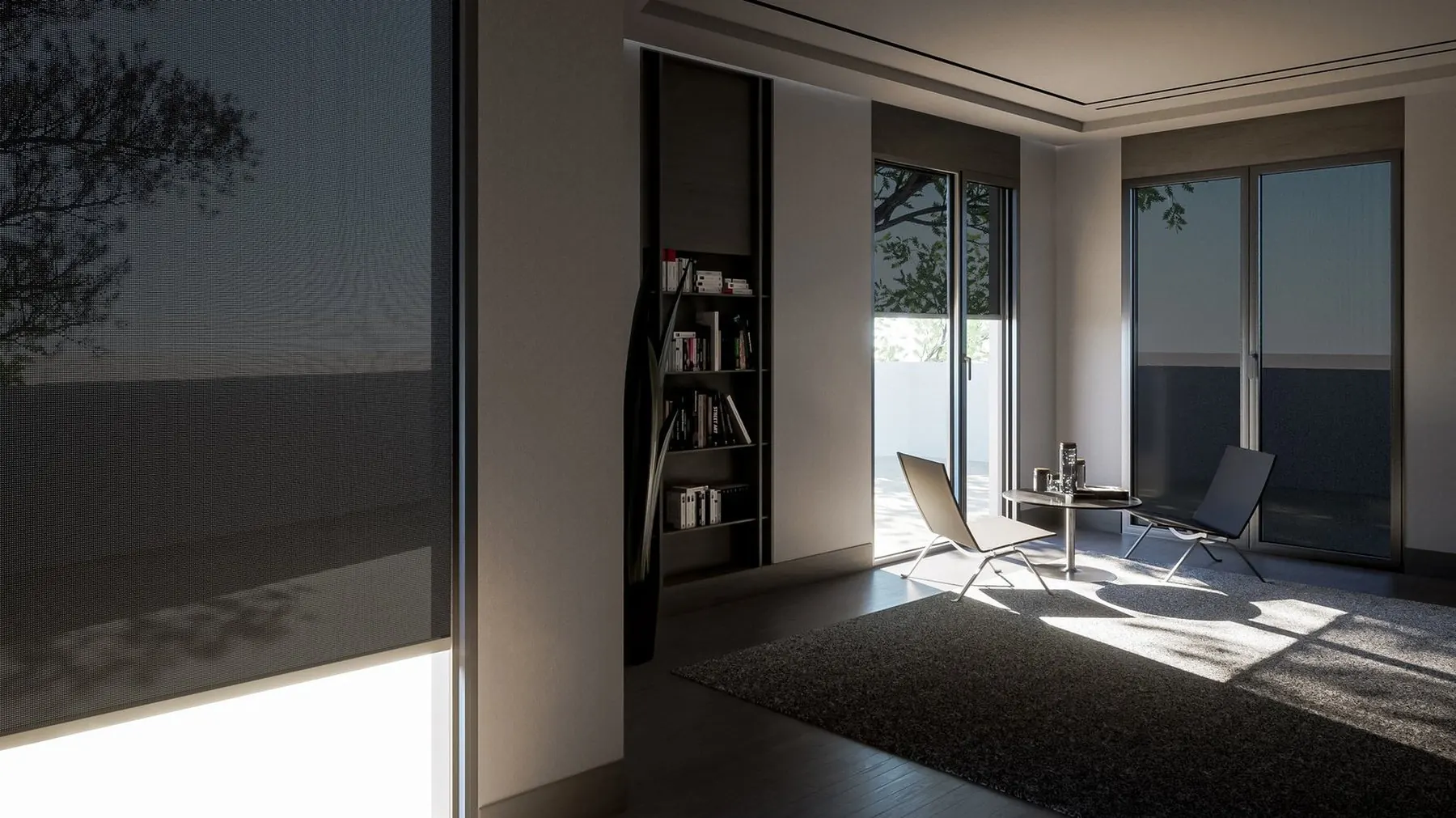
Since June 2022, new homes in England have had to meet Approved Document O, which caps summer solar gain; compliance applications are expected to make greater use of shading [1]. RE2020 in France expresses summer comfort as degree-hours calculated as if no air conditioning were installed, and a home above 1,250 degree-hours is non-compliant [2]. The same framework lowered the construction carbon limit for detached houses from 640 to 530 kg CO₂e/m² in 2025 [2].
Trade press reports that Part O has brought external shading forward as a solution [8, 9]. French market research links RE2020 to faster uptake of motorised products and to screens spreading from commercial buildings into homes [10]. Public concern points the same way: in a survey of more than 6,000 adults in six European countries, 45% said their home was not ready for extreme heat [11].
Carbon moves down to the product
The recast Energy Performance of Buildings Directive, (EU) 2024/1275, requires new public buildings to be zero-emission from 2028 and all new buildings from 2030; life-cycle global warming potential is to be declared for new buildings over 1,000 m² from 2028 and for all new buildings from 2030 [3, 4]. Some countries already set limits: Denmark’s fell in July 2025 and will drop to 5.4 kg CO₂e/m² per year for detached houses by 2029 [5]. The Netherlands, by contrast, postponed a planned tightening for housing in April 2025, citing the housing shortage and costs [12].
CBAM: the material decides
CBAM applies to aluminium and to iron and steel, but not to plastic or textile goods [7]. The obligation falls on the EU importer, with an exemption for those bringing in less than 50 tonnes a year [7]. Aluminium doors, windows and shutters under heading 7610 were included from the outset, while a proposal to add about 180 downstream products from 2028 has not yet been finalised [13, 14, 15].
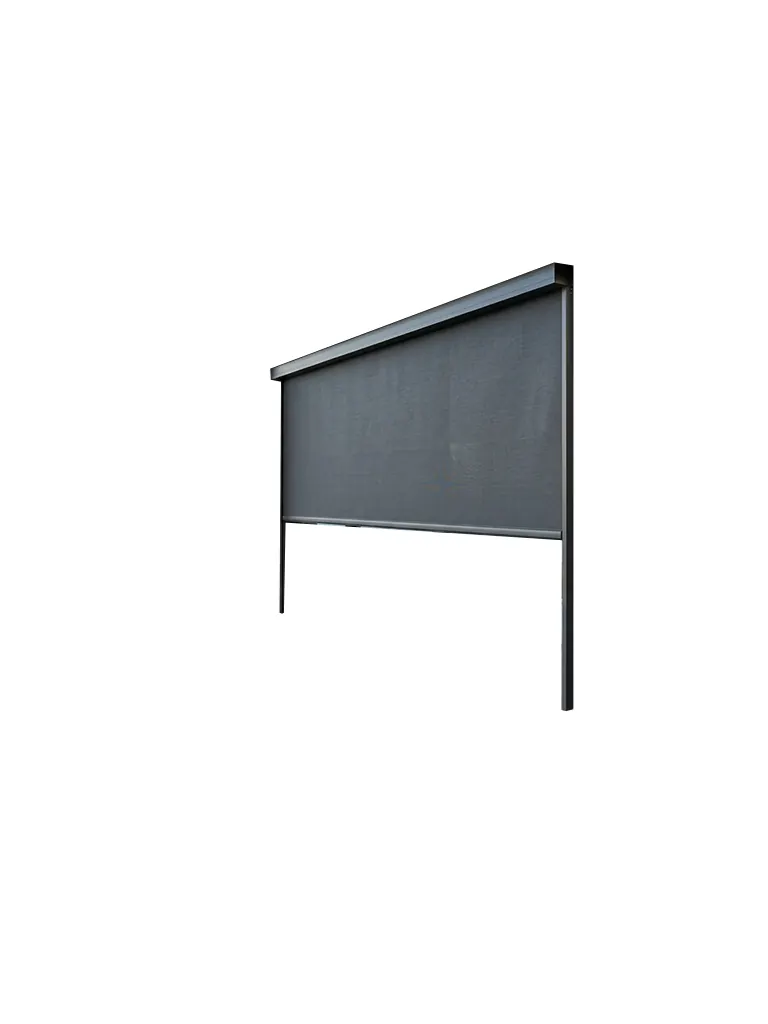
What a product is called does not matter for this purpose; the tariff heading depends on the material it is mainly made of [6]. As a result, aluminium roller shutters and window systems are within scope, while zip screens and PVC shutters are outside it [6, 7]. Since about 54% of Ferrini’s export value comes from zip screens, according to its approved orders, a large part of what the company currently ships is a product outside the mechanism.
Fixed dates and open questions
Member states must transpose the recast EPBD into national law by 29 May 2026 [16]. For product standards the timetable is longer: EN 13561 and EN 13659, both from 2015, are among the harmonised standards for doors, windows and shutters due to be redrafted in 2028–2029 [17, 18]. The open question is CBAM, whose extension to downstream products has not yet been agreed in final form [14, 15].
Frequently asked questions
What is an EPD and why will buyers ask for one?
An environmental product declaration is a verified document showing a product’s environmental impact over its life cycle. As carbon declarations and limits at building level spread, those designing buildings need carbon data for the components they specify [3, 5]. Profile, motor and fabric suppliers can therefore expect EPD requests, and when comparing suppliers it is worth asking whether an EPD exists or is planned for the product family concerned.
Do these changes affect the CE marking tests done today?
Not for now. The new Construction Products Regulation entered into force on 8 January 2026, but the existing harmonised standards stay in use until their successors are published [19]. Tests to EN 13561 and EN 13659 that support CE marking today therefore remain valid. What changes over time is the information expected alongside them, such as a digital product passport and environmental data [19].
Sources
- Planning Portal (UK Government), Approved Document O – Overheating, in force 15 June 2022, accessed 02.10.2026. https://www.planningportal.co.uk/applications/building-control-applications/building-control/approved-documents/part-o-overheating/approved-document-o
- Fédération Française du Bâtiment, RE 2020 : confort d'été et indicateur DH, undated, accessed 02.10.2026. https://www.ffbatiment.fr/techniques-batiment/reglementation-construction/reglementation-thermique-environnementale/dossier/re2020-confort-d-ete-et-indicateur-dh
- EUR-Lex, Directive (EU) 2024/1275 (EPBD – Energy Performance of Buildings Directive, recast), Official Journal of the EU 8 May 2024, accessed 02.10.2026. https://eur-lex.europa.eu/eli/dir/2024/1275/oj
- Construction Industry Federation (CIF), EPBD: Current state of play, 12 February 2026, accessed 02.10.2026. https://cif.ie/2026/02/12/epbd-current-state-of-play/
- DI Byggeri (Dansk Industri), De nye klimakrav til nybyggeri skal nu stå sin prøve, July 2025, accessed 02.10.2026. https://www.danskindustri.dk/brancher/di-byggeri/nyheder/arkiv/nyheder/2025/7/de-nye-klimakrav-til-nybyggeri-skal-nu-sta-sin-prove/
- World Customs Organization (WCO), Harmonized System Nomenclature 2022 Edition, chapters 39, 63, 73 and 76, 2022. https://www.wcotradetools.org/en/harmonized-system/2022/fr/116306
- European Parliament and Council, Regulation (EU) 2025/2083 amending Regulation (EU) 2023/956 as regards simplifying and strengthening the carbon border adjustment mechanism, OJ L, 17.10.2025. https://eur-lex.europa.eu/legal-content/EN/TXT/HTML/?uri=CELEX:32025R2083
- GOV.UK (DLUHC), Overheating: Approved Document O, 15 December 2021; updated 15 June 2022, accessed 02.10.2026. https://www.gov.uk/government/publications/overheating-approved-document-o
- Glass Times, Climate crisis cooling cure, undated page, accessed 02.10.2026. https://glasstimes.co.uk/featured-articles/climate-crisis-cooling-cure/
- Batiweb, TBC Innovations publie une étude sur les marchés des protections solaires en France, 17 February 2025, accessed 02.10.2026. https://www.batiweb.com/actualites/etude/tbc-innovations-publie-une-etude-sur-les-marches-des-protections-solaires-en-france-45922
- Clean Energy Wire, Half of people in Germany say their home not ready for heatwaves – survey, 11 March 2026, accessed 02.10.2026. https://www.cleanenergywire.org/news/half-people-germany-say-their-home-not-ready-heatwaves-survey
- Volkshuisvesting Nederland (Dutch Ministry of Housing and Spatial Planning), Aangepast wijzigingsbesluit en regeling milieuprestatie voor gebouwen, 2 April 2025, accessed 02.10.2026. https://www.volkshuisvestingnederland.nl/actueel/nieuws/2025/04/02/aangepast-wijzigingsbesluit-en--regeling-milieuprestatie-voor-gebouwen
- EUR-Lex, Regulation (EU) 2023/956 (CBAM), Annex I, Official Journal of the EU 16 May 2023, accessed 02.10.2026. https://eur-lex.europa.eu/eli/reg/2023/956/oj
- European Commission, Commission strengthens the Carbon Border Adjustment Mechanism, 17 December 2025, accessed 02.10.2026. https://ec.europa.eu/commission/presscorner/detail/en/ip_25_3088
- European Commission (DG TAXUD), Commission welcomes Council agreement on strengthening CBAM, 12 June 2026, accessed 02.10.2026. https://taxation-customs.ec.europa.eu/news/commission-welcomes-council-agreement-strengthening-cbam-2026-06-12_en
- European Parliament and Council, Directive (EU) 2024/1275 on the energy performance of buildings (recast), OJ L, 08.05.2024. https://eur-lex.europa.eu/legal-content/EN/TXT/HTML/?uri=OJ:L_202401275
- DIN Media, DIN EN 17037 – Tageslicht in Gebäuden; EN 17037:2018+AC:2021+A1:2021, tam date not verified, accessed 02.10.2026. https://www.dinmedia.de/de/norm/din-en-17037/348494031
- European Commission, First CPR Working Plan, 15 December 2025, accessed 02.10.2026. https://eur-lex.europa.eu/legal-content/EN/TXT/?uri=COM:2025:772:FIN
- Deutsches Institut für Bautechnik (DIBt), Die novellierte Bauproduktenverordnung ist bekanntgemacht, 2024/2025, accessed 02.10.2026. https://www.dibt.de/en/news/whats-new/news-detail/meldung/das-warten-hat-ein-ende-die-novellierte-bauproduktenverordnung-ist-bekanntgemacht